By Mohsin Khan | Updated May 2026 | 18 min read
The visa interview is the final hurdle between you and your study abroad dream. For Pakistani students, it carries extra weight — consulate officers are trained to probe more deeply when applicants come from countries with historically higher visa rejection rates. This guide gives you the exact questions for US (F-1), UK, Canada, and Germany student visas — with sample answers that have genuinely worked.
Part 1: Before You Walk In — What Actually Matters
The 3 Things Every Visa Officer Is Really Assessing
Regardless of which country you’re applying to, every consulate officer is trying to answer three questions about you:
- Are you a genuine student? Do you actually want to study, or is the student visa a route to immigration?
- Can you afford it? Do you have verified, legitimate funds to support yourself throughout your course?
- Will you go home? Do you have strong ties to Pakistan — family, property, a job offer, a business — that will pull you back after graduation?
Every answer you give should directly or indirectly address at least one of these three concerns. Officers are not impressed by ambition or enthusiasm alone — they are looking for evidence that you are a non-immigration risk.
Do’s and Don’ts for Pakistani Applicants
| Do This | Never Do This |
|---|---|
| Speak in short, confident sentences. Officers ask many applicants per day — brevity with clarity wins. | Memorise and recite scripted answers. Officers detect rehearsed responses immediately and probe harder. |
| Bring your complete document file — even if you’ve submitted everything online, having physical copies shows preparation. | Contradict what is in your application. If your SOP says you want to work in renewable energy in Pakistan, don’t tell the officer you’d love to stay and work in the UK. |
| Dress professionally. First impressions matter — officers make initial judgments in the first 30 seconds. | Say “I don’t know” to basic questions about your course, university, or city. Know your programme. |
| Be honest about gaps in your CV, previous visa rejections, or failed attempts. Trying to hide these and being caught is far worse than disclosing them. | Bring anyone into the interview room with you — interviews are strictly one-on-one. |
Part 2: US F-1 Student Visa Interview — 20 Real Questions & Sample Answers
The US F-1 interview is typically 5–10 minutes long and is conducted at the US Embassy in Islamabad or the Consulate in Karachi. Officers are trained to make fast decisions — most acceptances or rejections are made in the first 2 minutes. Your opening answers set the tone for everything.
Core F-1 Questions
Q: Why do you want to study in the United States?
Sample Answer: “I’m applying to the University of Texas for an MS in Computer Science because they have a specific AI research lab working on NLP applications for low-resource languages — which directly connects to my final-year thesis on Urdu text processing. I explored programmes in the UK and Germany, but this lab’s specific research agenda is what I need for my career goal of building an AI solutions company in Lahore.”
Why it works: Specific university, specific research lab, specific connection to your background, clear home-country return plan. No generic “quality education” answers.
Q: What is your field of study?
Sample Answer: Be precise. Name your specific programme — not just “engineering” but “Master of Science in Electrical Engineering with a focus on power systems.” Know your department name, the programme duration, and whether it’s a thesis or non-thesis track.
Q: Who is funding your education?
Sample Answer: “My education is being funded by my father, who owns a textile business in Faisalabad. He has provided a sponsor letter confirming Rs [X] is available for my full course. I also have a partial scholarship from the university covering 30% of tuition.” Be ready to state the exact amounts. Do not be vague about numbers — it signals unprepared finances.
Q: What will you do after graduating?
Sample Answer: “I plan to return to Pakistan after completing my degree. I have a provisional offer from a tech consultancy in Lahore who sponsored part of my application costs. My long-term goal is to build my own startup in the AgriTech space, targeting farmers in Punjab — an opportunity that makes sense based in Pakistan, not abroad.”
Q: Do you have any relatives in the United States?
Sample Answer: Be honest. If you do have relatives in the US, disclose them. Then proactively state: “My uncle lives in Houston, but I will be living on-campus in a university housing facility. I’ve already paid the accommodation deposit.” This shows you won’t be living with relatives off-campus, which is a common concern.
Q: Have you ever been refused a US visa before?
Sample Answer: Always be truthful — all previous applications are in the system. If you were refused: “Yes, I was refused a visa in [year]. At that time, my financial documentation was incomplete and my SOP did not clearly explain my return plan. Since then, I have completed my degree, secured a job offer in Pakistan, and my financial situation is now significantly stronger.”
Additional F-1 Questions to Prepare
- “Why this specific university?” — Know the ranking, a professor’s name, a research lab, a specific programme feature.
- “How did you get into this university?” — Describe your GPA, test scores, and application process briefly.
- “What is the tuition fee?” — Know the exact annual tuition in USD, not a range.
- “Do you plan to work while studying?” — You can work on-campus up to 20 hours/week on an F-1. If asked, confirm you know this rule.
- “What is your GRE/GMAT/TOEFL score?” — Memorise your exact scores.
Part 3: UK Student Visa — Credibility Interview Questions
The UK does not hold a standard in-person interview for all student visa applicants. Instead, UKVI may request a Credibility Interview (CI) — usually for applicants from Pakistan, India, Bangladesh, Nigeria, and China where additional verification is needed. If you receive a CI request, treat it as a formal examination.
UK Credibility Interview — Most Asked Questions
Q: Tell me about your course.
Sample Answer: Know the full course title, the awarding university, the duration in months, the number of modules, how assessment works (exams vs coursework), and the name of the programme director or a key faculty member. UKVI officers verify your knowledge against publicly available course information — vague answers raise red flags.
Q: How much will your course cost in total?
Sample Answer: State the tuition fee in GBP (exact figure from your CAS), plus the official living cost requirement (£1,334/month in London or £1,023/month outside London for up to 9 months), plus any IHS you paid. Know the total. Uncertainty about your own cost of study is a serious credibility issue.
Q: Who is paying for your studies and how?
Sample Answer: Name your sponsor, their income source, and be ready to state the bank name where funds are held. “My father is funding my studies. He owns a manufacturing business in Sialkot. The funds are held in an HBL account and have been available for the last 35 days.” Specific, verifiable, coherent.
Q: What will you do when your visa expires?
Sample Answer: “I will return to Pakistan. My family owns property in Lahore and I have a verbal agreement with [company name] in Pakistan to join their team once I graduate. My visa is for the duration of my course and I intend to leave when it ends.”
Part 4: Canada Student Visa — Common IRCC Questions
Canada student visa (study permit) applications are typically assessed without an in-person interview. However, IRCC may request an interview for Pakistani applicants, particularly if your application is complex or if there are concerns about documentation.
Q: Why Canada and not Pakistan or another country?
Sample Answer: “The specific programme at [University] integrates co-op work terms that are not available in equivalent Pakistani programmes. This will give me 8 months of industry experience alongside my degree — which I can bring back to Pakistan to contribute to our growing tech sector.”
Q: How do you plan to finance your studies?
Sample Answer: Know the exact GIC amount required by IRCC (CAD 20,635 is the 2026 requirement), your first-year tuition, and your sponsor’s verified income. IRCC requires you to show you can cover tuition + CAD 10,000 for living costs for year one. State these numbers confidently.
Q: What are your ties to Pakistan?
Sample Answer: List concrete ties: property ownership, immediate family (parents, siblings), a signed job offer or family business you’re expected to inherit, land deeds, or an ongoing business you’re currently part of. Abstract ties (“my heart is in Pakistan”) do not satisfy IRCC — document-backed ties do.
Part 5: Germany Student Visa Interview
German student visa interviews at the German Embassy in Islamabad are among the most structured of any country. Officers follow a checklist and expect precise, document-backed answers. The interview is typically 15–20 minutes — longer than US or UK interviews.
Q: How will you finance your studies?
Sample Answer: Germany requires a blocked account (Sperrkonto) containing a minimum of €11,208 (2026 requirement) in a German bank such as Deutsche Bank, Fintiba, or Coracle. You must be able to explain: “I have opened a blocked account with Fintiba containing €11,500, which covers the first year’s living costs. My tuition is €0 as I have been accepted to a German public university.”
Q: Do you speak German?
Sample Answer: If your programme is English-taught: “My programme at [University] is fully taught in English. However, I have enrolled in a Goethe-Institut German A1 course and plan to continue learning German while in Germany, as I understand it will help with daily life and integration.” Showing initiative on language learning is a positive signal.
Q: What is your field of study and why Germany?
Sample Answer: Germany is known for engineering — if you’re studying engineering, say so explicitly. “Germany has historically been the world leader in mechanical and automotive engineering. The [specific university]’s relationship with [company name] and their applied research approach is not available in Pakistan or the UK at this cost and quality level.”
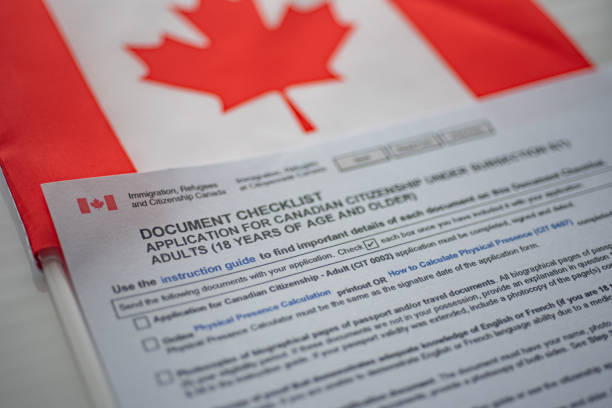
Document Checklist for Visa Interview Day
- Valid passport (minimum 6 months validity beyond course end date)
- Visa appointment confirmation letter
- University offer letter / CAS (UK) / I-20 (US) / Letter of Acceptance (Canada)
- Financial proof — bank statements, sponsor letter, blocked account (Germany), GIC (Canada)
- Academic transcripts and degree certificates (originals + copies)
- IELTS/TOEFL score report
- Statement of Purpose (your personal copy)
- Proof of home ties — property documents, employment letter, family business documents
- Recent passport-size photographs (always bring extras)
- Any previous visa stamps or refusal letters (must disclose truthfully)
Frequently Asked Questions
Q: How long does a student visa interview usually take?
A: Most interviews are short — US F-1 interviews typically run 5–10 minutes, while German interviews can run 15–20 minutes since officers follow a longer document-verification checklist. UK and Canada rarely require an in-person interview at all unless flagged for extra review.
Q: What is the single biggest reason Pakistani students get rejected in visa interviews?
A: Weak or vague answers about home-country ties and finances. Officers are checking whether you have a credible, document-backed reason to return to Pakistan after your studies — generic answers like “I love my country” without specifics (property, family business, job offer) are the most common rejection trigger.
Q: Should I memorise my answers word-for-word?
A: No. Officers are trained to spot rehearsed, scripted responses and often probe harder when they detect one. Know your facts (costs, course details, sponsor information) cold, but let your phrasing sound natural.
Q: What happens if I’ve been refused a visa before?
A: Disclose it honestly — all past applications are visible in the system regardless of country. Explain specifically what was wrong with the earlier application and what has concretely changed since (stronger financials, a completed degree, a job offer), rather than only saying “I’ve improved.”
Q: Can I bring a parent or friend into the interview with me?
A: No. Student visa interviews for the US, UK, Canada, and Germany are strictly one-on-one with the applicant. Family members can accompany you to the visa center but not into the interview itself.
Related Guides: UK Student Visa Refusal? How to Fix It | Top 10 Student Visa Rejection Reasons | Documents Required for Student Visa 2026 | Complete IELTS Guide 2026