By Mohsin Khan | Updated: May 2026 | Study Abroad Guide
Introduction
Let’s be honest — studying abroad is not just a dream for students in Pakistan. It’s a life-changing decision that can unlock better career opportunities, global exposure, and financial growth. But here’s what most consultants won’t tell you: the biggest mistakes happen BEFORE you even apply.
If you plan smartly for 2026, you can avoid visa rejections, financial stress, and choosing the wrong country entirely. This guide walks you through everything — with real numbers, real strategies, and honest advice.
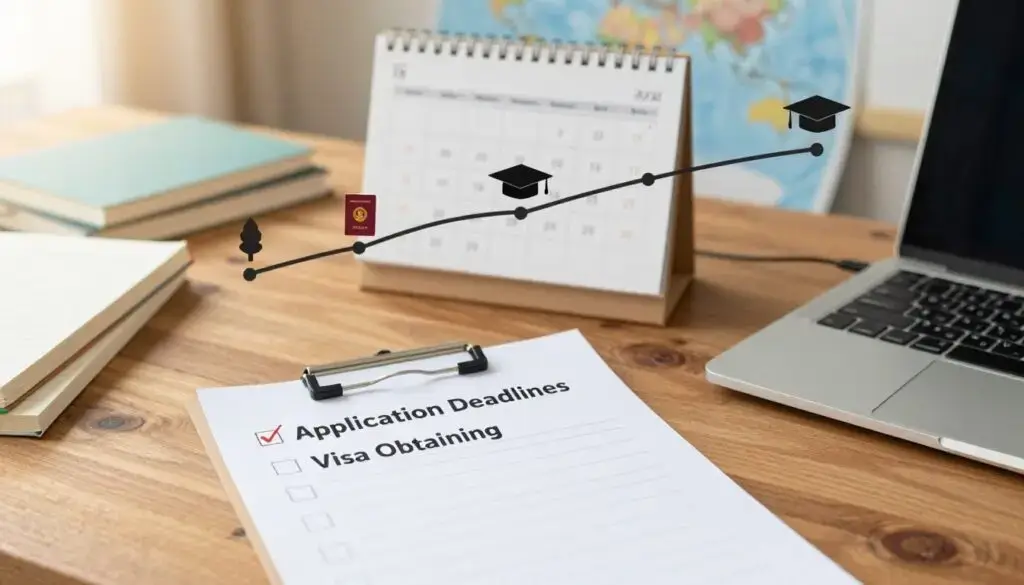
Step-by-Step Process to Study Abroad from Pakistan (2026)
- Choose the right country based on budget and career goals
- Shortlist 3–5 universities with realistic admission chances
- Prepare documents: SOP, LOR, HEC-attested transcripts
- Take required tests: IELTS, GRE, GMAT as needed
- Apply to universities (use uni-assist for Germany, UCAS for UK)
- Receive offer letter
- Arrange finances: loan, savings, or scholarship
- Apply for student visa
- Book accommodation and travel
1. Choose Your Country Strategically — Not Emotionally
Many Pakistani students choose a country because their friends went there or because they saw it on YouTube. Instead, ask yourself: “Can I afford this country AND build a future there?” The two things that matter most are your total budget and your post-study options.
Real Cost Comparison (2026)
| Country | Tuition Fees | Living Cost | Key Benefit |
|---|---|---|---|
| Germany | €0–€400/semester | €900–€1,200/month | Zero tuition + 18-month post-study visa |
| UK | £14,000–£25,000/year | £1,000–£1,500/month | 1-year Master’s + 2-year Graduate Route |
| Canada | CAD $15,000–$30,000/year | CAD $1,200–$2,000/month | Best PR pathway via Express Entry |
| Australia | AUD $20,000–$35,000/year | AUD $1,500–$2,500/month | 2–6 year post-study work rights |
| USA | $20,000–$50,000/year | $1,200–$2,500/month | Top research universities + OPT |
Decision shortcuts: Limited budget → Germany or Italy. Want fastest PR → Canada. Want academic prestige fastest → UK. Want best post-study work rights → Australia.
Germany requires a mandatory APS Certificate for Pakistani students — current wait is 4–6 months. If Germany is your plan, start the APS process today. Full details: Study in Germany for Pakistani Students 2026 — Complete Guide.
2. Budget in PKR — Not Dollars or Pounds
Currency fluctuations can destroy your budget. $20,000 tuition today could cost PKR 5–6 lakh more by the time you’re in your second year if the dollar strengthens. Always plan in PKR worst-case, not best-case exchange rates.
Hidden Costs You Must Factor In
- Visa fees (Germany: €75, UK: £490, Canada: CAD $150, USA: $160 + SEVIS $350)
- Health insurance (mandatory in Germany, UK, and USA)
- Accommodation deposit: 1–2 months rent upfront
- Return flight: PKR 150,000–300,000
- Winter clothing (significant cost if going to Germany, Canada, UK)
- Emergency fund: at least €1,000–£500 reserve
Financing Options
- Pakistan banks: HBL, MCB, UBL — secured loans requiring property collateral
- International unsecured: Prodigy Finance (for top-ranked universities), MPOWER (for US/Canada)
For full comparison of interest rates and repayment terms, read our Education Loan Guide for 2026.
Scholarships to Target
- Chevening (UK) — fully funded master’s
- Fulbright (USA) — fully funded for Pakistani students
- DAAD (Germany) — stipend + tuition + travel
- Türkiye Burslari (Turkey) — fully funded bachelor’s through PhD
Apply early — deadlines are 8–12 months before the intake. See our Fully Funded Scholarships 2026 guide for deadlines and eligibility.
3. Your SOP Must Tell a Real Story
Your Statement of Purpose is the single most important document in your application — and the one most Pakistani students get wrong. Admissions committees read thousands of SOPs. Yours must be specific, personal, and show a clear connection between your past and your future goals.
❌ Weak: “I want international exposure and to grow professionally.”
✅ Strong: “Growing up in Karachi, I witnessed frequent load-shedding and saw how energy infrastructure shapes daily life — which led me to pursue a Master’s in Renewable Energy Systems at TU Berlin.”
Read our detailed guide with real examples and a free template: How to Write a Statement of Purpose (SOP) 2026.
4. Why Student Visas Get Rejected — and How to Avoid It

Most Common Rejection Reasons
- Weak financial proof — bank statements too low or too recent
- Sudden large cash deposits into the account (red flag for all embassies)
- Poor or inconsistent academic history with no explanation
- Unclear future plans — why study this course, in this country, now?
- Inconsistency between your SOP and your interview answers
Visa Interview Tips
- Be honest — never memorize scripts, embassies spot rehearsed answers immediately
- Explain your funding source clearly and consistently
- Show strong intent to study — not to immigrate permanently
- Know your course: what modules does it have? Who is the program coordinator?
Read our full Student Visa Interview Guide 2026 with real questions and sample answers for UK, Canada, Germany, and USA.
5. Mental Preparation (Underrated but Critical)
Most students underestimate the non-academic adjustment. In your first semester you will face cultural differences, loneliness, language barriers, weather shock, and the pressure of performing academically while managing your own household for the first time. This is normal — but you can prepare.
- Book temporary accommodation before you arrive — don’t arrive without a place to stay
- Join Pakistani student societies at your university — WhatsApp and Facebook groups exist for every major university
- Learn basic cooking before you leave — eating out in Europe costs €8–€15 per meal vs €1–€2 cooking yourself
- Set up a monthly budget spreadsheet from day one — overspending in month 1 creates stress all year
Common Mistakes Pakistani Students Make
- Choosing a country based on trend or peer pressure rather than their own budget and career fit
- Ignoring total cost of study — focusing on tuition only, forgetting living costs and hidden expenses
- Copy-pasting an SOP from an online template — these are immediately recognizable to admissions staff
- Applying too late — missing scholarship deadlines and visa appointment slots
- Not preparing at all for the visa interview — treating it as a formality
Quick Checklist Before You Apply
✔ Country selected based on budget and career goal — not trend
✔ IELTS taken — minimum 6.0, ideally 6.5+
✔ SOP written with real personal story and specific program reasoning
✔ Letters of Recommendation requested from the right people
✔ Transcripts HEC-attested and ready
✔ Finances arranged or scholarship applied for
✔ APS application submitted if Germany is your target
FAQs
How much money is required to study abroad from Pakistan?
It depends entirely on the country. Germany is the cheapest option at roughly PKR 2.5–4.5 million total for the first year (including blocked account deposit). UK and Canada cost PKR 7–15 million per year at current exchange rates. See our 10 Most Affordable Countries guide for a full PKR cost breakdown.
Which country is cheapest for Pakistani students?
Germany — zero tuition at public universities, combined with the EU’s strong job market and PR pathway. The trade-off is the APS certificate process (4–6 months wait) and the €11,904 blocked account requirement.
Can I study abroad without IELTS?
Yes — Germany, Turkey, and China all have pathways that don’t require IELTS. Read our Complete IELTS Guide 2026 which covers 30+ universities you can join without IELTS.
Is studying abroad worth it?
Yes — if done strategically. Students who choose the right country for their budget and career goals, secure scholarships where possible, and enter with realistic expectations consistently report that it was the best decision of their lives. The key word is strategically.
Final Thoughts
Studying abroad in 2026 can transform your career — but only if you plan it smartly. Success comes from honest self-assessment of your budget, realistic country selection, an authentic SOP, and emotional readiness for what comes after. Don’t just aim to go abroad. Aim to build a sustainable global career from there.
Related Guides: Study in Germany 2026 — Free Tuition, APS & Visa Guide | Fully Funded Scholarships 2026 | How to Write a Winning SOP | Top 10 Countries to Study Abroad 2026 | Student Visa Interview Guide 2026